
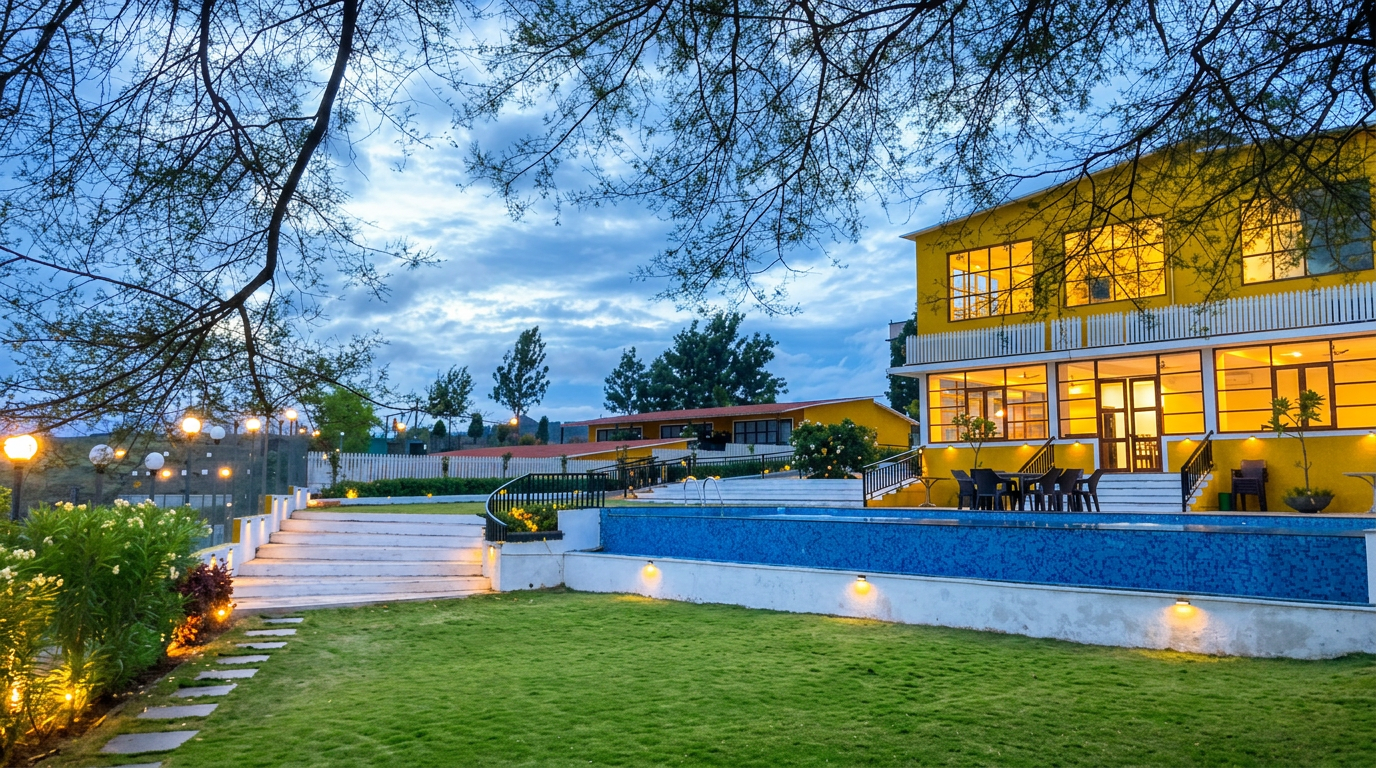
The short answer: the best time for birdwatching near Pune is November to March, when migratory birds arrive on the region's lakes and backwaters. The best-known spot is Bhigwan on the Ujani backwaters, where flamingos are usually seen from about December to March. Closer options include reservoirs and grasslands south of Pune. A weekend base at Shirwal, 58 km from Pune, lets you combine early-morning birding with a quiet lakeside stay at Avior Resorts on Wadgaon Lake.
Bird sightings depend on water levels, weather and the season, and change from year to year. Check recent local reports before you travel, and follow forest and reservoir rules.
Why winter is birding season around Pune
After the monsoon, the lakes, reservoirs and backwaters around Pune are full. As winter sets in, migratory birds arrive from colder regions to feed and rest, joining the resident species. Clear, cool mornings make it the most comfortable season to be outdoors at dawn.
Where to go birdwatching near Pune
| Place | What it's known for | Best months | Approx. from Pune |
|---|---|---|---|
| Bhigwan (Ujani backwaters) | Flamingos, waders, ducks, gulls; boat rides | Dec–Mar | 2–2.5 hours |
| Veer Dam area (Nira river) | Waterbirds and waders on the reservoir edges | Nov–Feb | Under 2 hours |
| Mayureshwar Wildlife Sanctuary (Supe) | Grassland birds; also chinkara | Nov–Feb | About 2 hours |
| Kavadi / Pashan and city lakes | Easy half-day birding inside or near Pune | Nov–Feb | In or near the city |
Times are approximate and vary with your starting point.
Bhigwan: the headline trip
Bhigwan, on the Pune–Solapur highway, sits on the backwaters of the Ujani dam and is often called the "Bharatpur of Maharashtra". In season, local boatmen take visitors out at sunrise to see flamingos and other waterbirds. Go early (boats usually leave around dawn), and agree the price and duration before you board.
Veer Dam and the Nira river
The reservoirs on the Nira river south of Pune attract waterbirds in winter. Birding here is typically done from the edges and nearby roads. Access to dam structures is restricted, so stay in public areas and follow signage.
Mayureshwar Wildlife Sanctuary
This small sanctuary near Supe protects a dry grassland habitat. It is better known for chinkara (Indian gazelle) than waterbirds, but it is a good place to see grassland birds in the cooler months. Check entry timings and permissions before you go.
Lakes in and around the city
For a short outing, Pune's own lakes and wetlands can be surprisingly rewarding in winter. They are a good place for beginners to practise before a bigger trip.
A birding weekend from Pune
Saturday
- 9:30 am: Leave Pune for Shirwal (about 1 hour 15 minutes on NH48).
- 11:00 am: Settle in; a slow walk along the lake edge. Note what you see.
- 1:00 pm: Lunch.
- 3:30 pm: Short afternoon outing to a nearby reservoir or the countryside around Shirwal.
- 6:00 pm: Sunset over Wadgaon Lake. Dinner and an early night.
Sunday
- 5:30 am: Very early start for your chosen birding spot (or a sunrise walk at the resort).
- 9:30 am: Back for a late breakfast.
- 11:00 am: Check out and drive home.
For Bhigwan, many birders prefer a separate, dedicated trip from Pune with a pre-dawn start, since it lies east of the city on the Solapur highway rather than on NH48.
What to carry
- Binoculars. 8x42 is a good all-round choice for beginners.
- A field guide or bird app for India, and a notebook.
- Muted clothing (greens, browns, greys); avoid bright colours.
- A warm layer for dawn; December mornings can be 8–12°C.
- A hat, sunscreen and water for when the sun comes up.
- A camera with a zoom lens, if you have one, but don't let it stop you watching.
Birding etiquette
- Keep your distance. If a bird changes its behaviour because of you, you're too close.
- No playback. Don't play bird calls to attract birds; it stresses them.
- Stay quiet, and keep groups small.
- Don't feed wild birds.
- Carry your rubbish back, including plastic bottles and food wrappers.
- Respect private land and village fields.
Beginner tips
- Go at dawn. Birds are most active in the first two hours of daylight.
- Start with the common birds. Learn egrets, herons, kingfishers and bee-eaters well before chasing rarities.
- Watch behaviour, not just colour. How a bird moves and feeds is often the best clue.
- Join a group walk run by a local birding club to learn faster.
- Record what you see in an app or notebook; it builds the habit.
Pair birding with a winter getaway
Birding mornings fit naturally into a winter weekend. If you're planning other winter trips, our winter getaways month-by-month guide and places to visit near Satara have more ideas. For nature walks closer to the resort, see things to do near Shirwal.
Common birds to look for near water in winter
Beginners can expect to see some of these familiar species around lakes and reservoirs in the Pune region. Sightings vary by place and year.
| Bird | Where to look | How to recognise it |
|---|---|---|
| Little egret | Shallow water, lake edges | Small, white, black bill, yellow feet |
| Grey heron | Standing still at the water's edge | Tall, grey, long neck |
| White-throated kingfisher | On wires and branches near water | Bright blue back, white throat, red bill |
| Pied kingfisher | Hovering over open water | Black and white, dives head-first |
| Indian pond heron | Lake margins, paddy fields | Brown when still, flashes white wings in flight |
| Black-winged stilt | Shallow water | Very long pink legs |
| Bee-eaters | Wires and bare branches | Green, slender, catch insects in flight |
How to photograph birds without disturbing them
- Use a long lens rather than getting closer.
- Stay low and move slowly; sudden movements flush birds.
- Shoot in the golden hours after sunrise and before sunset.
- Never chase or flush birds for a flight shot.
- Keep nests out of bounds, even if they're easy to reach.
Planning a Bhigwan trip
- Start before dawn. Leave Pune around 4:30–5 am to be on the water at sunrise.
- Book a boat locally and agree on the duration and route before you set off.
- Carry cash for boats and village tea stalls.
- Wear a cap and sunscreen; there's little shade on the water once the sun is up.
- Check recent flamingo reports before you go, as numbers vary with water levels.
Building a birding habit
- Keep a "patch". Visit the same lake or park every few weeks and notice how the birds change with the seasons.
- Log sightings in an app or notebook. Many birders contribute their lists to citizen-science databases.
- Learn calls. Many birds are heard before they're seen.
- Join a club walk or a local bird count; experienced birders are usually generous with tips.
Birding with children
Children often love birding when it's turned into a game. Give them a simple checklist of five birds to find, a pair of light binoculars and a sticker for each one they spot. Keep outings short (an hour is plenty) and end with breakfast.
Stay at Avior Resorts for a birding weekend
Wake up beside Wadgaon Lake, head out at dawn, and come back to a warm breakfast. Stays at Avior include a welcome drink, dinner and breakfast; ask us for an early tea before your morning outing.
- Call: +91 72619 62666
- WhatsApp: +91 72619 63666
- See rooms: rooms page · Enquire: contact page