
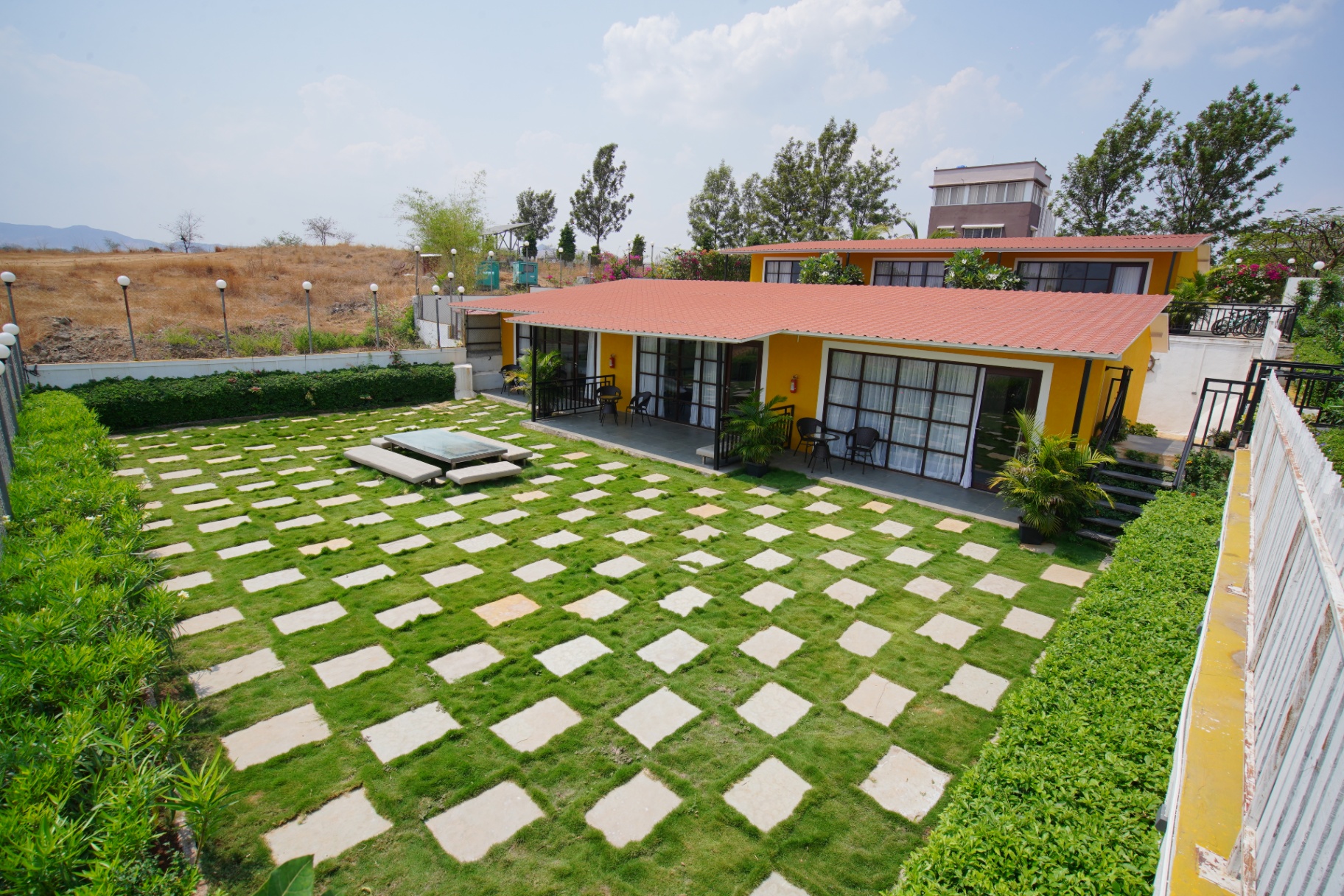
The short answer: the best time for stargazing near Pune is November to February, on nights close to the new moon. Driving even 50–60 km out of the city, away from bright lights, makes a real difference to how many stars you can see. You don't need a telescope; your eyes, a pair of binoculars and a free sky-map app are enough to start. A night at a quiet lakeside resort such as Avior Resorts in Shirwal, 58 km south of Pune, turns stargazing into an easy winter getaway.
Why you can't see stars in Pune
City lights scatter into the sky and wash out all but the brightest stars and planets. This is called light pollution. Getting away from the city, even partly, lets your eyes pick up much fainter stars. Winter helps too: the air is drier and clearer, and the monsoon clouds are long gone.
When to go: the moon matters most
| Moon phase | What it means for stargazing |
|---|---|
| New moon (and 3–4 days either side) | Darkest skies; best for stars and the Milky Way |
| First or last quarter | Good in the part of the night when the Moon is down |
| Full moon | Bright sky; great for looking at the Moon itself, poor for faint stars |
Tip: check a moon calendar before you book, and plan your trip for the week around the new moon.
What you can see in the winter sky
| Object | How to find it | What you'll see |
|---|---|---|
| Orion | Three bright stars in a line (the "belt") in the east after dark | One of the easiest constellations to recognise |
| Sirius | Follow Orion's belt down and to the left | The brightest star in the night sky |
| The Pleiades | Follow Orion's belt up and to the right, past the reddish star Aldebaran | A tight cluster of blue stars; beautiful in binoculars |
| Gemini | Two bright stars (Castor and Pollux) to the north-east of Orion | The twins; home of the Geminid meteors |
| The Moon | Any night it's up | Craters and mountains in binoculars, especially along the shadow line |
| Planets | Varies by year; check a sky app | Bright points that don't twinkle like stars |
The Geminid meteor shower
The Geminids usually peak around 13–14 December, and are one of the best meteor showers of the year. Watch after midnight from a dark place, lying back on a reclining chair. How many you see depends on the Moon and the sky that year, so check a meteor-shower forecast in early December.
What to carry
- A red torch (or a phone torch with a red filter). Red light protects your night vision.
- Binoculars. 7x50 or 8x42 are good for stargazing.
- A sky-map app, set to night mode.
- Warm clothes. December nights near Pune can drop to 10–12°C, and lying still makes you colder.
- A blanket or mat and a reclining chair.
- A flask of something hot.
How to stargaze: a beginner's routine
- Arrive before dark so you know your surroundings.
- Turn off bright lights and put your phone screen on its dimmest setting.
- Give your eyes 20 minutes to adjust. Faint stars will slowly appear.
- Start with Orion, then hop to Sirius and the Pleiades.
- Use binoculars to look at the Pleiades and the Moon.
- Lie back and wait for meteors; patience pays.
- Note what you saw. It's satisfying to build a list over the season.
A stargazing night away from Pune
| Time | Plan |
|---|---|
| 2:00 pm | Check in at the resort |
| 4:00 pm | Pool or a walk along the lake |
| 6:00 pm | Watch the sunset and the first stars appear |
| 7:30 pm | Early dinner |
| 9:00 pm | Bonfire, then move to a dark, open spot on the lawn |
| 10:00 pm | Stargazing session: Orion, Sirius, the Pleiades |
| After midnight | (In mid-December) watch for Geminid meteors |
| 7:00 am | Tea by the lake; slow breakfast |
At Avior: let the team know you're coming to stargaze. Lawns by the water give an open view of the sky; ask which spot has the least lighting after dinner.
Stargazing with children
- Keep it short: 30–45 minutes is plenty for young children.
- Start with the Moon; it's exciting in binoculars.
- Tell the stories behind constellations; Orion the hunter is a favourite.
- Bring snacks, blankets and a hot drink.
For more family ideas, see our family-friendly resort guide.
Combine it with other winter plans
Stargazing fits well into a winter weekend with a morning outing, such as winter birdwatching near Pune or a day trip to Wai and Menavali. For a full season plan, see our winter getaways month-by-month guide.
Photographing the night sky with a phone
Modern phones can capture surprisingly good night-sky photos:
- Use a tripod or prop the phone firmly on a wall or bag.
- Switch on night mode and let it take a long exposure (10–30 seconds).
- Turn off the flash and tap to focus on a bright star.
- Use the timer so you don't shake the phone when you press the shutter.
- Include a foreground, such as a tree or the lake, for a sense of place.
Light-pollution etiquette
- Keep torches pointed down and use red light.
- Avoid car headlights near a group that is stargazing.
- Dim phone screens and use night mode on apps.
- Ask before switching on lights if others are already observing.
Myths about stargazing
"You need to go to the mountains." Elevation helps, but getting away from bright city lights matters more.
"You need an expensive telescope." Binoculars show more than most beginners expect, and are easier to use.
"Stars are best on a full moon." The opposite: moonlight brightens the sky and hides faint stars.
"Shooting stars are rare." On a dark night you'll often see a few sporadic meteors an hour, and many more during a major shower.
Winter sky calendar (approximate)
| Month | Highlights |
|---|---|
| November | Taurus and the Pleiades rise in the evening; Orion rises later |
| December | Geminid meteor shower (peak around 13–14 Dec); Orion well placed by late evening |
| January | Orion, Sirius and Gemini high in the evening sky |
| February | Winter constellations at their best in the early evening |
Planet positions change every year, so use a sky app for your specific dates.
Why winter weekends work best
Winter around Pune brings the clearest, driest nights of the year. Combine that with a stay outside the city and a night close to the new moon, and you'll see far more than you expect. Afternoons are warm enough for the pool, evenings are cool enough for a bonfire, and nights are made for looking up.
Book a stargazing night at Avior Resorts
Pick a date near the new moon, and spend the night by Wadgaon Lake, 58 km from Pune. Stays include a welcome drink, dinner and breakfast.
- Call: +91 72619 62666
- WhatsApp: +91 72619 63666
- See rooms: rooms page · Enquire: contact page